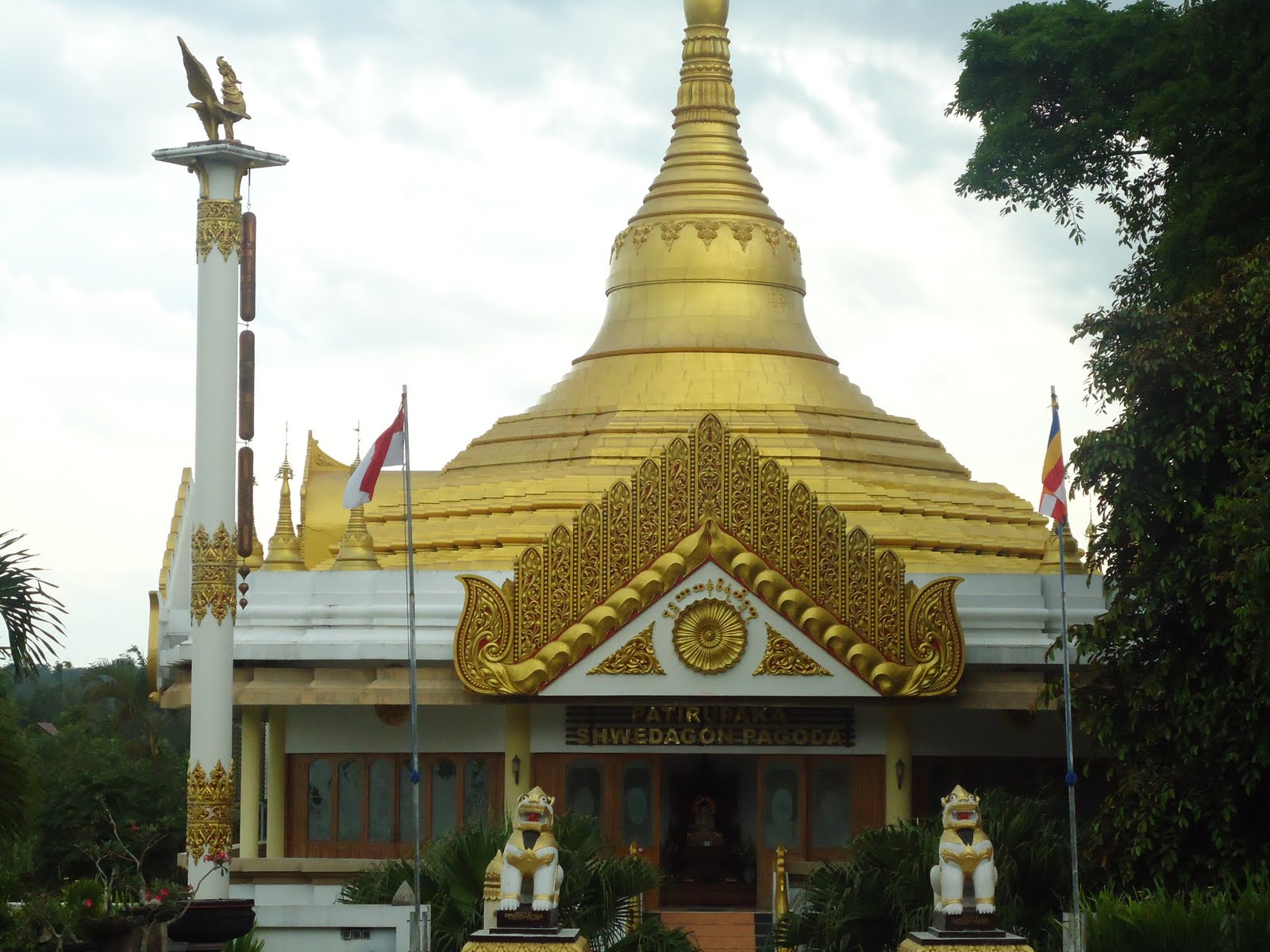
Tuesday, November 1, 2016

The Carmelites

The Carmelites

The Carmelite novices and me


For almost a week now, I have been enjoying the hospitality of the Carmelites, the “O.Carms” to be exact.  They have a house that is their headquarters here in Malang, and they were willing, and I was told, “waiting” to take me in here, even though I am no longer teaching at the Catholic seminary.  Since I have been here, I have felt so embraced and included in much of their life.  From the first day when the Provincial showed me all around the house, my presence here has not seemed intrusive but welcome.  Two of the other guests are priests who usually live in Rome, in the “Curia,” the vast bureaucracy run by the Vatican to administer the various orders around the world.  Conversations that occur around or after the dinner table or during my weekend stay at a villa in the nice, cool city of Batu have allowed me a glimpse of political-religious realities in countries such as the Phillipines and China.  Everyone is so forthcoming and open! 


One day I had the chance to help one of the priests with his Powerpoint presentation for the conference that begins this week.  I was introduced to meditative dance, not just in the abstract, but we did the dance together, mirroring each other’s slow, meditative movements!  Through conversations with him, I have learned about the importance of the body in any real transformation.  He takes candid pictures of the novices when they first come in to begin their journey to priesthood, and you can read on their faces worry, skepticism, doubt, fear, sadness, the negative emotions and thoughts.  They are taken when people are unaware of what their faces are projecting.  Then he showed me pictures of the same men years later, after their formation, and better, transformation as priests.  Their faces reflected happiness, lightness, peace. 


This week, I am privileged to attend the Carmelite Formators’ international course with priests and brothers, and a woman from Holland who belongs to the first order of priests (hmm. . .) coming together from all over the world.  The theme is “Walk with Us: ‘Growing in the Contemplative Dimensions of one’s Life.”  It is comforting for me to see that even as Carmelites they struggle with how to convey the meaning of contemplation in the 21st century world.  And yet they seem to know that it is exactly what is needed—the silence that enables a person to listen and be present, especially to listen within, and to respond with love.  The best definition of contemplation came from the presenter, Fr. Anthony Pereira, a biblical scholar and teacher, now fifty years a priest, who said, “joy is the essence of contemplation.”  That is what I experience here with these priests—joy.   And a comment that someone in our small group discussion made to him about the Carmelites:  “you are real.”


Today in the New York Times, David Brooks talks about Martin Buber’s “I-Thou” relationship.  He tells us that Buber’s writing reminds us to be “intentional and brave about relationships.”  That is a reminder I have been given all through my stay in Indonesia--in Yogyakarta, in Bali, and in Malang.  I am amazed that this is who I have become in relationships with so many I have met, and what I have been given here.  This has been and continues to be a wonderful way to wrap up my stay here in Indonesia.

Saturday, September 3, 2016

My Life at the Catholic seminary of Vincentians and the Ordination of a Bishop

  My life has taken such an amazing turn, that over the last month or so, I just keep marveling.  Having come to Indonesia as a Fulbright Specialist to teach at CRCS in Yogyakarta, I now find myself, by way of my good Carmelite friends in Bali, teaching at the seminary known as STFT Widya Sasana.  One blog cannot do justice to the entire experience, because it is so many-layered.  I have never before taught seminarians, as most of my teaching has been in secular environments, such as at Appalachian State University and even Berea College, with its Christian commitment.
Yet, I feel at home here in many ways.  I am drawing on my Catholic roots, the spirituality learned mostly from the Jesuit Sodality of Mary when I was in high school, and then further formed by the brief stay with the Carmelites of Cleveland.  All of that marked me in ways that are mostly unconscious and little articulated.  However, here I am doing what in some ways is most natural for me, teaching.  It helps that I kept drawing on this tradition intellectually by my work on the Catholic poet and priest, Gerard Manley Hopkins, and my continual fascination with the mystics, and on "saints" not recognized officially by the church, such as Thomas Merton and Dorothy Day.  Still, there is a sense that it is highly presumptuous of me to be teaching these young men to be priests!  I hope and can already see that in little ways they are also teaching me.

  I am living with the Vincentians, an order also known as the Congregation of the Mission, because they were founded in the 17th century by St. Vincent de Paul, a priest who first wanted only to make money by serving in the big urban parishes of Paris, and then underwent a "conversion" to see his mission as serving the poor of Paris and in the little villages, where people knew both spiritual and material poverty.  I am gaining a great deal of respect for this order in my long conversations over dinner with various priests here.

    I am including here a short video on the life of St. Vincent, who sounds remarkably like the saint who will be canonized today, Mother Teresa of Calcutta!!


 Besides learning about the order, there is another reality that is emerging as I begin to peel back a couple more of the layers of this many-layered society.  Everything here has to be said in plural (and in the Indonesian language, plural is indicated by using the noun twice!).  A remark that one of the Vincentians made last night is interesting.  He expressed the sentiment that there is a deep spirituality and love for silence in the Javanese people, thanks to the immersion in the Hindu and Buddhist traditions that came to this island many centuries before either Christianity and Islam.  In the book I am reading here, In the Time of Madness:  Indonesia on the Edge of Chaos, the author talks about "panditos," Javanese sages, who went to caves to practice meditation and influence the harmony of the earthly realm.


  Even politics is seen to be under the supernatural, with the ruler possessing or losing wahyu, literally "light," but a supernatural kind of power and charisma.  In my second tour of this island, I see even more how prevalent "kejawen" the indigenous Javanese practices and beliefs, are to this people.  On the other hand, the hegemony of Java, where most people live, and where the government resides, leaves behind those from the outer islands, further from these centers of political and even spiritual power.  I learned last night that in Borneo, in the western part of Kalimantan, where this order of Vincentians has missions, Christianity only came in the 1970s and has not yet taken root in people's deep attitudes.   More and more, I see people here identifying with their tribe, which I don't put in quotation marks, because there is still a reality of tribalism that operates brutally at times, as in the late 1990s, when Dayaks, the people of Borneo, turned on their Madurese immigrants in absolutely horrendous fashion.  Javanese not only distinguish themselves from those of the Outer Islands, such as Sumatra, Kalimantan, Papua, and others, but from the Chinese who have lived and prospered here for a very long time, and who make up a significant part of the population of the Catholic Church here.  That story is one I will have to leave for now.


  That brings me to the beautiful ceremony of the ordination of the new Bishop of Malang yesterday.  I got to know him briefly while sharing a meal with him in Bali, thanks to my good Carmelite friend, Fr. Joseph.  He too is a Carmelite, a more contemplative order than the Vincentians. The Carmelites and Vincentians were among the earliest Catholic orders to establish a base here in the city of Malang.  I know from his first responses when told that the Pope wanted him to be bishop, that he had many reasons why he could not do it, and he had wanted to spend the rest of his life teaching and writing books.  I know from watching him give a careful presentation on Genesis 1 and 2 as a "talk show" for the community in the capital city of Bali, Denpesar, that he is at heart a teacher, and I saw him patiently answer many questions about marriage from the lay people who attended. I also saw him acknowledge his grief over the loss of his brother, a fellow Carmelite just a year before.  I shared with him my own family's story of my father as a Holocaust survivor and my mother a former Benedictine nun!  So we made a good personal connection, and that was evident when he invited me to accompany him to the opening Mass on the first day of school here. Knowing his heart made this whole ceremony-- watching him prostrate himself while a litany of prayers was said over him, then the laying on of hands by each of his fellow bishops, the reading of the letter from Pope Francis by the papal nuncio, his receiving the symbols of the episcopate (ring, mitre, and big hat)--much more moving for me.

  So I continue to be awed by all that I am learning and experiencing here, both the beautiful and the terrible.  I am so very far from understanding it, but just keep opening myself to these offerings from some great spiritual Source.


Friday, August 12, 2016

My Class at CRCS


Teaching the course on “Religion, Women, and the Literatures of Religion” was one of the highlights of my teaching career.  From the first day, when I stepped into the classroom and was greeted with smiles and welcomes, I knew I could feel comfortable bringing what I knew and wanted to teach to these students.  This class of students had already been seasoned and prepared to be a community of learners by having studied the better part of the year in this unique program.  I did not detect the kind of competitive edge that is so much a feature of classroom interaction in the United States, and I feel that has something to do with the culture here of long-standing collaboration and sharing.  It was certainly evident in the way these students worked together, laughed together, and enjoyed time after class, such as in “buka puasa,” the opening of the fast that comes during Ramadan.  Coming from various parts of this vast country, from Medan on the island of Sumatra, from Aceh, from the small island of Lombok, as well as many cities around Java, they also represented diverse religious backgrounds, the majority Muslim, but also Protestant Christian and Catholic Christian (the one Catholic being a Sister of Notre Dame whom the students had come to see as “ibu,” Mother).  About three-fourths of the students were male, and although that might have seemed an impediment to learning almost the entire semester only about women, these young men showed no signs of resistance, and in fact demonstrated an amazing openness and willingness to engage the issues confronting women in the Middle Ages as well as today. 
What was just as impressive to me was that they were reading and writing academic studies in English, a discourse that can be difficult even for native speakers!  They stretched themselves in so many ways that it was truly admirable, and I know many of them struggled.  Despite that, they produced response papers that were for the most part readable and intelligent, some brilliant.  I heard so many new insights from their unique perspectives, and they helped me to look at these works by medieval and modern women with new eyes. 

The content of the course consisted primarily of writings from Christian mystics and visionaries of the Middle Ages, as well as a thesis written on Sufi women mystics.  We encountered the remarkable prison diary of St. Perpetua, martyred in 203 C.E., and marveled over the multi-talented abbess, musician, poet, prophet, mystic, Hildegard of Bingen, discussed food in the writings of the unique medieval women’s group, the Beguines, and then focused on the book, Showings, written by Julian of Norwich.  I would like to include here some of the comments students made when reading her beautiful treatise, to give some idea of how open they were to learning across boundaries of time, gender, and theology:
“Her style of contemplating God is set in the fourteenth century, but the meaning is still alive and meaningful today and invites us to share in that same trustworthy love. “

Showings reveals a woman who experienced God directly and as “our mother.”

“Her revelations of the feminine side of God are a very significant contribution to all of us now.”

“God’s grace and divine love through a feminine figure is such an empowerment and encouragement for all beings, not only women.  Also men, because the feminine qualities show how simply love can comfort and heal, just like a mother’s love.”

“The dualism of feminine/ masculine no longer exists in Julian’s understanding of God.  God is feminine, and at the same time also masculine.  The human/body and the divine, the feminine and masculine, each of both is actually a union.”

I was very happy to have Najiah Jim’s Master’s Thesis on Sufi women, based on her interviews with three women connected to   pesantrens, in order to balance what could have been an over-emphasis on the Christian tradition, the one I know best.  We also had a chance to invite Yuli Yulianti, a Buddhist scholar who happens to be a friend of mine.  Yuli helped explain how the female lineage in Theravada Buddhism died out, and has not been restored because the line was broken.

Two of the most exciting, energizing classes were led by Bu Dewi Chandraningrum, who brought us readings from her edited volume, Body Memories.  I was very happy to have Bu Dewi’s presence in the classroom, and to see the student’s immediate warm responses to her as she sometimes spoke in Bahasa Indonesia, the language most accessible for them.  In her first class, she divided the students into three groups, in discussion of three topics relating to the female body:  menstruation, sexual intercourse, and childbirth.  What could have been a class of silence, embarrassment, or even giggles, became a serious, mature conversation among the students.  I was awed by their willingness to discuss such sensitive topics together, with mixed genders.  Bu Dewi’s second class introduced us to the women activists of Kartini Kending, and the opposition to the proposed cement factory that has already decimated villages and their way of life in northern Java. 

I would like to say in conclusion, that based on the readings from the women mystics like Julian of Norwich, whose theology of the body is holistic, non-dualist, and healthy, and intensified in the sessions led by Bu Dewi, this class became almost a spirituality of the body.  Sacred sexuality and the sacredness of the female body became an underlying theme.  I will let one of the students have the last w  “Women’s bodies can be very good when interpreted as fertility, mercy, and wisdom, but they can also be interpreted as objects attracting sexual desire or even worse as spiritually less than men.  . . .  The narration of Hawa (Eve) and Sri (Javanese goddess figure) could be seen from any point of view, depending on our intention.  Yet, perceiving that male is more spiritual than woman by nature is not only male centrist, but also discriminating over the other and shows how arrogant it is.”  This student and others showed me at what depth of understanding they were interpreting what they read and heard.  They were a gift and joy to teach!
ord by quoting from his final paper:


Monday, July 4, 2016

Coming to Bali!

I am fulfilling a dream I had five years ago, and a promise I made that I would return some day to Bali, and in particular to a special retreat center nestled high in the mountains of central Bali, where  the air is cool and fresh.


I am able to spend a week here on this lebaran holiday (like our Christmas) for the end of Ramadan, and already I have been welcomed "home" by the director of the retreat center.  The beauty and spirit of this place is so indescribable, that I will have to post some pictures to give some idea of what I see and absorb here day after day.

  There is also a real prayer life here, as the morning and evening "Office," the "Liturgy of the Hours," are said in chapel every day, and at the morning office, there is also the Mass integrated into the reading of the psalms.  Because I had just had the experience of monks at the Buddhist vihara in Batu, just above the city of Malang, I can feel the connection as this beautiful ritual of chant moves us into and out of the day.  There is also a special devotion here to Bunda Maria, the Mother of Carmel, because this is a Carmelite retreat house, in the spirit of the prophet Elijah, and the saints like St. John of the Cross, St. Teresa of Avia, and so many more.


  What I feel most of all, and what has brought me back here is that I am loved.  Just a little while ago, another Maria, who does many duties here, and who once gave me a head massage that cured my bad flu, told me we have been friends for five years.  Whenever I contacted them over the years, I heard, "We are waiting for you."  They have waited for me here for five years, and all I have done is show up and receive this love.  All I can give is my heart, and I give it gladly, freely.

 To sum up, what I experience here is growth, the growth of so many varieties of fruits and vegetables and flowers, and the growth of the spirit of love and community.  I am being planted here.

Friday, July 1, 2016

"We are the Sufis"

I have wanted to post this blog for some time, but life has gotten in the way.  Too many experiences and meetings with amazing people and of course the teaching of my class twice a week.
  Before I left Indonesia five years ago, I had wanted to meet some real Sufis, the subject of my first research proposal.  My friend, Pak Habib, fulfilled that desire the very last week of my stay, on our trip to Lamongan to meet the former jihadist fighter, Ali Fauzi.  We stopped at a Sufi shrine, where men and women were gather to pray.  I was invited into the inner circle of the shrine.  By the very end of my visit, I asked Habib, where were the Sufis while I was here?  His answer is the title of this blog, "We are the Sufis."
  Now that I am teaching in a multi-religious, very open and inclusive center of religious studies, I am constantly reminded of the importance of the Sufis.  In fact, one of my friends who works at the Center has written her M.A. thesis on Sufi women, a very interesting contribution to the class.  She shared her thesis with us, and we got to read how she had come to interview three women identified with Sufism in some way.  We heard so many of the themes that we had come across in the medieval women mystics of the Christian tradition: emphasis on experience, intuition or inner knowing, memory of God, body memories.
 This background was vital when we visited a "pesantren," an Indonesian boarding school for children and high schoolers, where a variety of subjects, in Islam and the Qur'an, as well as a broader curriculum are taught.  We met and talked for two hours to the "kyai," the leader of the pesantren.  He was a man trained in psychology, and also brought to the conversation his own emphasis on being at the center where he said the "essence" or "reality," is, not only around the periphery where interpretation and commentary arise.  That was so very consistent with the essay by Bro. David Steindl-Rast, "Mysticism: the Core of Organized Religion," http://csp.org/Steindl-Mystical.html, that we had begun our class with.  I looked at Najiyah, the woman who written her thesis on "Women, Spirituality, and Power" after interviewing the kyai's late wife, and we both felt the coherence immediately.

Monday, June 13, 2016

At the Vihara ("Buddhist Monastery")

My time at the vihara was a gift of peace and connection with those who live a life of dedication and meditation.  I was given the honor once again of presenting the dishes at the meal to Bhanti, the abbot, who is now 86 but still immediately launches into perfect English when he sees me.  Monks eat their last meal of the day before noon, so we met in the dining hall about 11:00.  As a woman, I could not directly hand the dishes to Bhanti, but placed them on a cloth on the floor, where they were then handed to him by one of the monks.  Still, Bhanti's vihara is unique and "revolutionary," as my Buddhist friend, Yuli, says in having a group of young nuns studying at the Buddhist college there.  They will either return to their villages as lay women or continue there as teachers in small colleges or as spiritual guides in the viharas.  Buddhists here in Indonesia go back long before the arrival of Islam in the 14th century or so, brought by traders from India.  There are now a small minority.

The visit also brought me into contact with "Sister" Mutia, who was so helpful to me, as a friend, and even as a psychotherapist.  She immediately asked me about my well-being and saw that I had done a good deal of healing since my last few months of pain over the end of the marriage.  Her very presence is a comfort.


I also managed to get in a trip to the "Gereja Igen," the cathedral church at the center of Malang, thanks to my good friend, Pak Habib, who was always willing to "jemput," pick up and drive us everywhere.  Habib's friendship was one of the special gifts of my time in Indonesia, because, as an anthropologist, he is knowledgable about so many of the cultural and religious oddities underlying the mainstream of Islamic religious life.  He loves talking about the wayang, Hindu goddesses, rituals of various sorts from the Javanese indigenous spirituality.

So as is obvious, the life here is almost too rich to capture in simple blog form.
  Once again, I would like to resort to the book I have mentioned and use a quotation that she ends with:  "Citizens of a bounteous land, Indonesians are united, too, by an extraordinary generosity of spirit, a tolerance of difference.  They welcome strangers like me into their homes and their lives, they go out of their way to help people in trouble. . . . .Indonesia's upsides--the openness, the pragmatism, the generosity of its people, their relaxed attitude to life--are ultimately the more seductive traits, and the more important."  

Thursday, June 9, 2016

In Batu and Malang

I have come back to the city of Malang and the little hill town to the north,  Batu, where the air is amazingly cool and fresh,  even cold at night.  I was here five years ago as a Fulbighter, and now wanted to come back to meet old friends.
 Before,  I lived in a gated community which could be isolated from everyday life.  Now I live with a family,  the gently invite me into their life and into speaking the language.


  Today I will go to the vihara,  monastery,  to meet my old friend, Mutia, who was such a help to me before. Mutia cannot be a nun though she looks like one,  because the monastery in the Theravada tradition.  Yuli, a budding Buddhist scholar working on her Ph.D. in Leiden, came with me here from Yogya, and told me on the 8-hour train ridethat Buddhism revived here only in the 1950s.  The vihara is one of my spiritual homes here in Indonesia, where I went for meditation and peace.
 

Thursday, June 2, 2016

First class and Borobudur!

This blog post will be challenging, mainly because there is so much to convey!  I met my class for the first time Wednesday, and from the very first moment, they were welcoming to say the least.  Even after pulling "all-nighters" to finish papers from their last semester, they seemed bright, energetic, and really open to learning.  One student described what he has been learning at the Center for Religious and Cross-Cultural Studies, as being like "heaven" for him, because at least some have come from strict religious backgrounds where discussion, understanding, seeking are not in the forefront.  And the diversity of the class--from places like Aceh, Sumatra, Medan, Madura--was evident, from the islands that make up this vast and incomprehensible country.  These are only names to me because I have not been to any of these "outer islands."  But a very good book I have been reading before the trip, called Indonesia, Etc., by Elisabeth Pisano, does give a fascinating account of her tour through these islands, that make her describe this island of Java as "The Other Indonesia."  I downloaded the Kindle version after arriving, and still find it good reading.
Climbing the steps of Borobudur at the end of the procession

 Then, in the afternoon, we went to Borobudur, which you may know as one of the greatest "stupas," like Buddhist temples for holding relics, in the world, second only to Angkor Wat.  The structure itself is phenomenal, but having many villages represented in colorful performances, and a final half-dancing, half-walking procession to the  temple made the whole event even more awe-inspiring.  I was moved to be included in the groups making their way in order to say that the land and temple are too sacred, and should not be destroyed by more development of the site.  Already, many people were displaced by the restoration of this magnificent place.  If you get a chance, do look it up on the internet.  I am sensing more ecological consciousness here than five years ago; or perhaps there is more in this city than in the Dutch colonial city of Malang, where I lived before.  On the other hand, many things seem to be changing here, in small and sometimes consequential ways.

The trip to Borobudur in the CRCS van gave me a chance to get to know and actually bond with the students over the five or more hours of travel, meals, and time witnessing the performances.  I will leave my impressions for another blog, as this one is getting too long.  Their kindness is obvious from this photo of Sister Elizabeth treating me to fresh coconut.


Monday, May 30, 2016

Leaving the Bubble

Tomorrow I begin my teaching, the real reason I have come to Indonesia again.  This time I have been given the privilege and challenge of teaching my own course, one called "Religion, Women, and Literature."  I am excited, and a bit apprehensive.


  This also means I am leaving the bubble of the hotel, a rather gargantuan one, much too large for my taste and too removed from everyday life, for a place in a house with a family that was arranged beforehand by my friend and companion, Nelly van Doorn-Harder.  I met the family, "Oma," the mother of Farsijana, Margaret, or "Iit," the sister, and some assorted helpers, one a driver and two cooks and cleaners.  To say they were kind and hospitable is to put it too mildly.  Their kindness was overwhelming and disarmingly sincere.  They had been praying for us to arrive safely, and prayed with us before we left.  Living with the family will give me a chance to practice my "bahasa," the word for "language," which implicitly refers to the Indonesian language.

  It has been hard to keep up with this blog because so much is happening, and because the jet lag keeps me from being alert enough to think.  But a few days ago I met the woman who  will be the guest lecturer for my class.  Her name is Dewi, and she edits a journal for women.  Her brother drove and accompanied us to a fine organic restaurant.  He works at an NGO which helps battered women as well as those who have been trafficked.  I am so impressed with these people, and seem to be meeting more activists in this country than I had met five years ago.  Tomorrow, after the first class, I am invited to go to Borobudur, the enormous Buddhist stupa, where a ceremony held by villagers will demonstrate their desire to preserve the land from further development and expansion of this ancient site.  I sense so much more consciousness of these values of gender equality and ecological harmony.

 In the next blog I will report on my first class and the students, as well as the trip to Borobudur.  That ought to take up several blogs, but one will have to do, if I am to be faithful to this.

Thursday, May 26, 2016

At long last, I am taking up this blog again, having just arrived back in this mysterious but wonderful country of Indonesia after five years absence.  This time, I will be teaching at the Center for Religious and Cross-Cultural Studies of the University of Gadjah Mada.  I can only say, what a great opportunity!  The joy, the learning, the experience, will be mine, as I propose to offer something of what I know to these really very dear, interesting people.  But more of that to come.
  After what can only be described as a long and grueling trip, about 30 hours in the air, I was in Jakarta for one night in order to have a security briefing of just one hour offered by the American Indonesian Exchange Foundation, which governs the Fulbright program here.  If this sounds complicated already, it is certainly that for me, as I have had to wend my way through various bureaucratic agencies, not all in sync with one another, much less with me.
 But as I arrived on the last leg of the four-part flights, in Jogyakarta, a city in Central Java, I was greeted last night by one of my counterparts here, Pak Anchu, as he calls himself, though his real name is longer.  Indonesians seem to like being called by names that have nothing to do with their real names.  I had been writing him, assuming he was just an administrator, only to find out on the ride from the airport that he holds a doctorate from a good American university, and his specialization is indigenous religions.
 Right now, I am settled in a luxurious hotel, the Hotel Tentrem, so it is hard to believe that this is really a developing country, with so much poverty around.  As if the accommodations, and international foods of the breakfast were not enough, my companions for this part of the stay have decided on a spa trip this afternoon.  Good massages and facials are part of the culture, so I shouldn't feel so guilty about going along and treating myself.  I hope I won't get too used to it!
Well, if you have read this far, I will ask your indulgence for these ramblings on my first full day, after the sleepless nights and jet lag have taken their toll.  I hope to be more alert and have more to say as time goes on.  Your questions and feedback would be helpful too, dear reader. Enough for now.  Maria

Tuesday, June 7, 2011

Alam (Nature) Islamic School in Banguwangi


The Banguwangi “Alam” (Natural) Islamic School: “The Character School”

 On the way back from Bali and Banguwangi, at the far end of the island of Java, I visited this very special alternative Islamic school.  It calls itself (in English) the “Character School,” specializing in “leadership, religion, language, and science.”  To say I was greeted warmly would be an understatement.  As I got out of the car, I was surrounded by somewhere between 35 to 40 students, even on a Sunday, a holiday for most schools here.  The staff member driving the university car remarked, “you are famous here, like a movie star.”  But what was overwhelmingly touching was the way each student gave me a “selaman” greeting, taking hands to their heads first and then to the heart.  I was speechless.  My friend and colleague, Habib, had arranged all this, because he has taken an interest in this school from the start.  We then proceeded to open the boxes of books that I and others had donated.  I saw the headmaster brush away tears from his eyes as he held a Qur’an I had given.  (I did not get a chance to tell him that a friend in Bosnia had given it to me after she came back from the Hajj.)  After opening the boxes, the teachers and headmaster asked me to give a little speech (this is done regularly here in Indonesia, and public speaking is an emphasis at the school.)  I don’t know what I said, but I wanted to convey how happy I was to share these English-language books with them, and that I would like to come back and hear them tell me in English what they have learned.  

Habib told me on the long trip through East Java afterwards that, “The School makes the students more creative, more independent, more innovative, since they learn by themselves, not because of the teachers.”  It is an alternative to the madrassahs and “pesantrens” (special Indonesian boarding schools that have traditionally taught reciting the Qur’an and only recently added a fuller curriculum).  What distinguishes this school is that it is open to all students, regardless of their ability to pay.  In fact, it is famous in the media for being the school where parents can pay with vegetables.  Each Monday the students bring vegetables from their families to cook for the week.  The students even cook by themselves.  When students do not have money to pay, they are welcome to come, and the school tries to find sponsors for students who cannot pay.  The school does not need expensive facilities like big buildings, and does not even need classrooms. The teachers are motivators, not teachers.  That is why they spend less money.  The group with the student leader sets the lesson plan, and the group evaluates the plan.  On the exams, their grades are not so high, but above average, but the advantage is they are more self-confident, and have more facility in English and in Arabic.  When they continue their study to senior high school, they can work as tutors because they have acted as mentors to other students in their elementary school.  Their skill in mentoring is more important than the scores on their subjects.  They become trained as trainers; from the beginning they are sent to other schools to be mentors to students of the same age.  When they graduate from the school, they are really self-confident mentors.  Even in everyday life, they feel everybody should have an opportunity to be a leader in the group.  Not only in learning, but also in praying. They have to be ready to be imams.  Class is community-based.  Every week the leader changes.  
Of course the school, taking children aged six to twelve, is Islamic and at the same time stresses  “generous character” open to global insights.   It is inclusive, open, not exclusive, and welcome to the poor.  Not fundamentalist.  In their studies, the teachers and students try to strike a balance between religious education and life skills that will be useful in religion, society and the nation.  As Habib has often said, Indonesia is still a feudal society, so the emphasis on independence and creativity is hugely needed in a country and culture where innovative thinking is not prized, and people expect to follow orders.  I hope that in the future I and others of like mind will be able to contribute in some small way to this school.   “Selaman.”

Thursday, June 2, 2011

The Thousandth Day

Last night I was invited, along with Fr. Joseph, the director of the St. Joseph Retreat House, to attend what is considered the three-year of thousand day anniversary of the death of a spouse.  Some say this is old Javanese custom, commemorating first the fortieth day, then the hundredth, the one year, and finally the thousandth day since the death of the loved one.  As we arrived in the large music studio where Mrs. Cecelia Tolus and her husband have conducted their teaching in all kinds of musical instruments, we were led into a room where an altar was decked in flowers, and where somehow it smelled funereal.  There was no body, however, only a picture of the husband, and three pictures beside his, one of his mother, one of his brother and one of his sister, all of whom had also passed away.  Our only ritual act at this point was to take flowers from trays arranged in front of the photo, and put them in a box to be taken to the graveside this morning.  After a time of chatting among the guests, some two hundred of them, a group of us remained for a memorial Mass.  All these people were there to support Cecilia, who told us that she was both happy and sad that night, and her face really showed it.  Cecilia, now one of my good friends here in Bali, had already shared with me at her house some thoughts she had written, in which she put into writing much of what she has been learning from the words of Neale Donald Walsch, that death is not the end, and that with every loss there is something of a gift to be discovered.  The priest who offered the Mass told an interesting story (translated for me by Fr. Joseph) that when he left the seminary in Malaysia he was told he would be working among the Bataks (I think that’s the right ethnic group but there are so many!) who are people of the “long house.”  They have always made their houses one long house, where people can come and go and be connected.  Now, they are making separations, putting up walls, changing the character of their life together.  All this relates to the point made so well in a book I have been reading about Java that I will quote it here.  The book is A Shadow Falls in the Heart of Java by Andrew Beatty, an English anthropologist who lived over several years in a small village in east Java with his family.  Here are his words about leaving the village life and returning to what was once “normal” :
"In the village, daily life was shared.  You grew up with people, attended their weddings and prayer-meals, shared their misfortunes, helped dig their graves.  And at every waking moment they were around: tending the next field, sweeping the yard, sitting on your doorstep in the evenings.  As you fell asleep you could hear their coughs and murmurs through the wall.  Their presence was the inescapable condition of your existence.  I was always we. In death or life, nobody was every really alone.  If you moved to a different part of the village, our old ties fell away but there would be others just as strong.  It wasn't depth or continuity that counted but the sustaining presence of others, like Frost's silken tent.  One could drift between families and neighbourhoods, marry and remarry, but the gentle embrace of the community was constant.
In the West,--or perhaps simply out of the village--you pursued your 'own life.'  Of course, you had friends and relatives and at regular moments your lives overlapped with theirs, but your path was separate.  An individual destiny, with goals and obstacles, life was 'what you made of it.'
We knew what it would be like to return to the isolation and boundedness of the nuclear family:  an adjustment of shape; a shock for the children; separate lives.  . . .  We had nothing to go back to, no jobs or settled life, nothing planned: it was too soon."
Those are Andrew Beatty's words, but as I end my Indonesian journey, I can relate to them in my own life, and, to my surprise, even as I look toward leaving here, I also contemplate returning, and making a place for myself that is not separate.


Monday, May 30, 2011

"Quiet Saturday" and Easter

My blog would not be complete without finishing the journey through Flores, including what is called "Quiet Saturday," the day between Good Friday and Easter.  On that morning, we left the cathedral grounds in Larentuka, but paid a visit to a shrine dedicated to a Monsignor Mannick, a bishop from Indonesia who ended up serving the Native Americans in Colorado and whose body has been miraculously preserved.  This preservation thing is such a Catholic phenomenon, and in many ways my contact with the Catholic community here has taken me back to the American Catholic Church of about fifty years ago.  Outside the shrine, the sisters who tend it told me that he left Indonesia because of a conflict within his order, and that is the kind of sanctity, a difficult and  messy one, that I can relate to.  We paused for photos with the sisters and their pumpkin produce, and then packed into the bus for the journey westward, pausing at an incredibly beautiful beach, Wayterang Beach, along the way.

As on the other days of riding the bus, we laughed and prayed our way along the steep and narrow highway taking us westward to a Carmelite retreat house at Mauloo.  We arrived in time for a quick "shower," (meaning hand dips with cold water), and went to the church for the Easter Vigil Mass.  What made it poignantly beautiful for me were the young girls dressed in long skirts and sashes, swaying to gentle rhythms of a music not unlike Hawaiian.
  On Sunday after Mass (which I missed having "slept in" till 6:40 AM), we piled into the bus for one last ride to Ende, our starting point for the flight home.  That night we had what seemed luxurious accommodations in a hotel after such primitive, insect-ridden rooms.  The next morning four of us rented a car and drove along another beautiful beach outside Ende, and then up into a "kampung," village, where people of Flores live their lives as they have for hundreds of years, and where everything revolves around the church life.  At the very end of our journey, after the flight home, we arrived back at our retreat house in Bali.  To our surprise, there was a feast waiting for us, complete with whole roast pig.  Then came the Balinese dancers, beautifully attired in off-shoulder (no head-scarves in Bali) flowing dresses with wide capes at the sides.  The Bali dancers finished their dance, and then before I knew what happened, I was invited to go up and dance with them.  I see that invitation and dance as a good metaphor for the end of my time here in Bali and in Indonesia generally.  The hand of the Bali dancer beckons: "Come join the dance."  And I will.  I am ending my time here in a much better place than when I started.  I am ready for the dance.  

Saturday, May 28, 2011

The Parish Councils At Carmel Retreat House, Bali


I am once again enjoying the beauty and peace of the mountains of Bali; I could almost feel guilty at being offered such a paradise this close to my return to the States.  But I am soaking it in, including the feeling of being family here, of belonging.  This morning, I had been asked by Fr. Joseph to give a talk to the leaders of parish councils, all men (!) who had come for the weekend.  I had been hearing their laughter wafting periodically from the conference room next to my room.  I knew my talk on “Christianity and Human Rights” and the situation in Indonesia, far short of upholding the rights of the minorities, would not be laughable.  But they were great good listeners, despite our language barrier (I still have not mastered the language enough to speak and even understand questions in Indonesian).  I had a very good translator, two in fact!  The most interesting part came in the questions period when one man described having been a leader of his Muhammadiyah Muslim youth group while in school, then going into a church and seeing a statue of Jesus holding a lamb (the Good Shepherd) and wanting to study Catholic teachings.  When he signed up for the Catholic classes, he said everybody, including the headmaster, hated him.  He went on to study to be a catechist, and even considered the priesthood.  Another man told of being part of an interreligious dialogue begun in Bali after the Bali bombings, and how the top-down approach, beginning with religious leaders, was having an effect.  Finally, a man who described himself as a policeman spoke, telling a gripping tale of violence when a Catholic policeman was defamed by someone in East Timor (no longer part of Indonesia, but a country that won independence through a bloody rebellion against the government of Indonesia).  He described a Catholic mob that was out of control, attacking and burning Muslim homes and markets.  He told them at one point they would have to kill him first if they wanted to keep on burning down homes.  Then he put the Muslim people in the police barracks to keep them safe.  The men asked me at one point for a solution to all this, and my only response could be to have the religious leaders, now so powerful in the political sphere, speak out forcefully of the forgiveness and mercy and justice at the heart of each religious tradition.  I told them my personal story of having my research proposal turned down by the Ministry of Research last summer, and that my director at the American-Indonesian Exchange Foundation, Nellie Paliama, had confided in me finally a couple weeks ago it was because they feared “Christianization.”  These are some of the realities of the complexity and intractability that is Indonesia.  I can only hope that pointing to the problems rather than covering them up will help make a difference.


Wednesday, May 18, 2011

A Month of Conferences


Two Conferences, Two Concepts

In the last two weeks, I have spoken to the Peace Corps, have given a paper at a conference on human rights in the Law School of the University of Jember, have gone to Jakarta for a Fulbright conference, and have given a presentation on character-building at an education conference here at the University of Muhammadiyah Malang.  Two of these conferences, one on human rights from the Christian and Muslim Perspectives, responded to the actual problems of violations of human rights between majority-minority religions in Indonesia, and the other was a Fulbright conference where all the 200 or so Indonesians granted a scholarship to study somewhere in America were invited. 
I feel strung between two very different Indonesias, the one in trouble from radical forces within Islam, and the other wonderfully hopeful.  One speaker at the Fulbright conference was one of forty people selected by Sukarno, the first president of the independent republic of Indonesia, to study in the United States.  This first group of Indonesians from an independent republic came back and started programs that shaped the whole future of education in this country, even adopting the American system of education (though they have a long way to go to meet American standards, sorry, Indonesia).  He said, wisely, that “this is the era of the battle of concepts, of knowledge,” and nothing could be more true of Indonesia right now, as it teeters on the brink of further radicalism fostered by certain Islamist groups even recruiting in the universities, and most recently at the university where I am teaching, taking students away to radicalize them and make them “ministers” in the new Islamic country of Indonesia.  The hope for an Islamic state under Shari’a law is still very much alive among some small but influential groups.  This same ambassador has been around a long time, and so he remembered taking Gus Dur (the familiar name of the much loved but impeached president of Indonesia, Abdurahman Wahid) to America, where they met with President Clinton.  Clinton said in an aside to Gus Dur, “A successful Indonesia will help to characterize the twenty-first century.  If Indonesia can show that Islam and democracy are compatible, we will have a successful century.”
That hope was actually the substance of the conference I participated in at the University of Jember in East Java. These speakers (and I) were really very serious about seeing the enforcement of Indonesia’s constitution guaranteeing freedom of religion.  Having me on the panel representing (ha!) the Christian perspective on human rights made a strong statement of openness to a more pluralist ideal in Indonesia.  Yet, there were hints that this too was an ideal that still exists on the horizon of people’s consciousness.  A kind of apologetics for the dominance of Islamic mosques and the difficulty of getting permits to have churches built was a sub-text of one speaker’s presentation, no matter how he tried to make it sound open and fair.  He pointed out the one instance of difficulty in mosque-building in a generally Christian area of West Timur without mentioning the numerous instances of denial of permission for building churches all over Java, not to mention . the 240  church burnings and attacks on churches in the last six years.   I hurriedly cut out some of the more stringent comments I had in my paper about the Muslim majority’s fear of Christianization being the reason for most of the denials. 
But I really felt the audience’s sympathy in the question and answer period.  One participant described her “sadness” for her country at hearing what I had to say; and much concern was expressed over the ongoing conflicts between religions.  I guess I am always on the side of the underdogs, since I systematically took the side of Muslims when I was in Bosnia-Herzegovina, seeing their persecution and outright genocide at the hands of so-called “Christians” like the Serbs and Croats.  Here, my sympathies go to the Christians, many of whom just want to co-exist here without bothering the majority.  It is such a complex question!  Unfortunately, I am feeling more difficulty accepting the predominance of one religion, especially when it invades the air space over loudspeakers at four in the morning.  But this Fulbright conference gives me much hope for the future, and even inspires me, seeing these young scholars and students willing to venture forth to our country to learn and bring back knowledge that will surely bring Indonesia closer to its democratic ideals.

Thursday, April 28, 2011

"Pilgrimage" to Flores

 Wayterang Beach, Flores
Last week I took a flight from Malang to Denpasar, Bali, where I was picked up by Fr. Joseph Gerungan, director of the beautiful retreat house up in the mountains of Bali, a region called Bedugul.  Once there, I was joined by a group from all over Java who were heading east to the island of Flores for "Pasca," Easter.  What a trip it was!  After a day spent at the retreat house, we arose early the next morning (3:00 AM Java time!) to catch an early flight to Ende, in the middle of the island of Flores.  Once there, we boarded a bus traveling all day on narrow mountain roads through breath-taking scenery, high mountains on either side, and lush greenness untouched all around.  That long ride got us only to Maumere, where we had a hotel for the night before boarding the bus again to get to Laruntuka, just in time for "White Thursday," or what Christians in the West call "Holy or Maundy Thursday."  Holy Week had begun. 
On the boat before the crowd 
   The traditions of Larentuka are Portuguese Catholic, and most of the people, well over 90% are Catholic, the exact opposite of the situation in Malang, where the population is well over 96% Muslim!  At Larentuka we stayed at the cathedral "guest house," but that is dignifying it a bit too much, since accommodations, designed for visiting priests, were rather primitive.  The next morning, however, we got to the beach, where we boarded a boat that would take us first to a small chapel on a nearby island, where numbers of pilgrims entered, approaching a statue of the crucified Christ on their knees.  After that moment of piety, we were off again on the boat to join dozens of other good-sized boats, each carrying increasing numbers of people, for a boat procession, that would follow a very tiny boat, rowed slowly by a couple of men, and I am told holding an image of the Child Jesus.  (I never found out why that image was the one that 500 years of tradition had employed, but I liked it that we were following an image of life and birth rather than death and suffering.)  The whole experience was fun, relaxing, and extremely scary, as our boat got so overloaded that it kept tipping to one side and the other, taking on water each time, until finally a few people got off onto yet another equally overloaded boat.  Thank God!  There were no life-jackets, and little children, three and four years old, were stationed right along the sides. 
  After the boat procession, we had just enough time to get ready (very hot and sweaty by now) for the afternoon's "Way of the Cross" and donned our second special tee-shirt of the day (both saying "Ave Maria Larentuka") for this ancient ceremony.  As usual, as the "bule," foreigner, I was asked to sit up front, and since my camera was totally out of charge, I borrowed my new friend, Josephine's, who accompanied me at the front (to the protests of the usher because she wasn't bule).  There are fifteen priests at the cathedral, and most of them were up at the altar for the veneration of the cross and Holy Communion ceremony (no Mass on Good Friday).  After our next meal (Indonesian Catholics don't seem to make much of the fasting rule for Good Friday, as snacks kept being passed around throughout the boat ride) we assembled again at church for a symbolic procession where the body of Christ was symbolically carried in a coffin accompanied by wailing lamentations and powerful drumbeats.  Girls carried sticks of bamboo, rice, fruits, and the other produce of this incredibly fertile land.  At the front of the church was the ancient Portuguese "Mater Dolorosa," Mary, Mother of Sorrows, and at Fr. Joseph's invitation, I went up to take a picture of her, seeing her strength and firm gaze on the scene. 

  Numbers of groups of Confraternities and other lay groups were called, and our group waited until finally we were able to join the long, very long candlelight procession wending its way the along the main street, also candlelit on either side, of Larentuka.  And that was only the first day of the Triduum!

Wednesday, April 13, 2011

Teaching at "Pascasarjana"

In March, I began my teaching assignment at the Post-Graduate School (Pascasarjana) in the area of sociology of religion.  Actually, I share a course with another professor, who is teaching a class on social analysis using the works of a group of Italian social theorists of the 19th and early 20th centuries.  It's a really weird fit.  But I squeeze my course on the world religions into the middle of it, and the students don't seem to mind.  They are supposed to be doing presentations on papers they write using those same Italian social philosophers to analyze the current social problems of Indonesia.  Huh?  But despite the incongruity of subject matters, it has been a rich and challenging experience for me.  I get to teach only twice a week for an hour and a half each time, with two different groups of students, only about 6-10 in each class (when they all show up, which is not often).  What I really like are their questions.  They are often so profound as to catch me off guard.  Yesterday I was asked what about the nature of "hyper-reality," a student's made-up term for metaphysics.  And what is the origin of the images of gods and goddesses in Hinduism.  Do they only have a destroyer god in Hinduism, and if so, how does the creation get started?  Where is the "proof" for their religion? I answered, and I hope did not destroy their faith in the process, that there is no proof in religion!  (They like to think of Hinduism as a tourist attraction for the many visitors to Bali, but I wanted to show them it is a far more serious religion than meets the eye.)  Of course, all this has to be communicated in our mutually broken languages.  Sometimes, but not always, there is a "translator," who often goes off on tangents of his own if he is there. 
  A greater challenge is meeting the unspoken paradigm of their religion of Islam (but I do have one Catholic student) as the true and perfect religion.  This idea came out forcefully when I introduced the work I was doing on comparative spirituality last semester.  A student said that since I teach all religions, I do not have enough sympathy with Islam.  I bring a pluralist perspective to some who are clearly exclusivists.  Even among the "tolerant" of this Muhammadiyah institution, I hear that it is "natural" to have separation among the religions, although Muslims are commanded to treat others well.  Muhammadiyah is known as a "purification movement" that was founded with some influence from Wahabism.  My friend, Yuli, who teaches Buddhist studies at the Buddhist college attached to the monastery up the road, believes I am here opening the door of the Muhammadiyah community just a little, and my presence will do some good.  I hope she's right.

Sunday, April 10, 2011

At the vihara


  Today I was invited (at the last minute of course) to go to the vihara, Buddhist monastery, just up the road, and give food offerings to the bhikkus (senior monks) and samaneras (maybe something like seminarians).  The vihara has become my second home as I have gone together with friends to have long chats with Sister Mutia, a "holder of the eight precepts."  She has been there since 1995, after studying to be a Protestant theologian and deacon for six years in Holland and after that, three years as a Hindu in Bali.  What a journey!  I only had time today to gather up some cookies from my pantry, although Mutia had offered to buy some from their own store, but I didn't find her.  So I humbly, really humbly, offered my cookies to the monks who passed by with their begging bowls by the table of foodstuffs arrayed in front of a line of lay people.  I had seen this practice of monks going out begging, and lay people acquiring "merit" by offering from their own food.  But here I was participating in it.  An even bigger privilege awaited me.  While all the hundred monks or so were eating,  I sat with some of the laity in the back of the dining hall, where I was suddenly told by a very young novice nun that I would be offering my food to the Abbot!  I was feeling so chagrined, and saying, "I don't have any food left; I gave it all away," when suddenly a tray of goodies, fermented coconut and "sticky rice" appeared, and I was able to bring it up to the front of the hall, in front of the hundred or so monks and about fifty lay people, laying it at the table of the head monk, Bhanti Kanti.  There were tears in my eyes as I offered it to him, and said, "I feel so privileged" to be able to do this.  Indeed, I felt more privileged than I had ever felt as a Fulbright scholar here.  The privilege was that of a simple human being being acknowledged just for that.